
FAQ · Coverage & data quality
On-chain data coverage and quality: the questions buyers ask
Which chains, how much history, what is decoded, and how you can check it yourself.
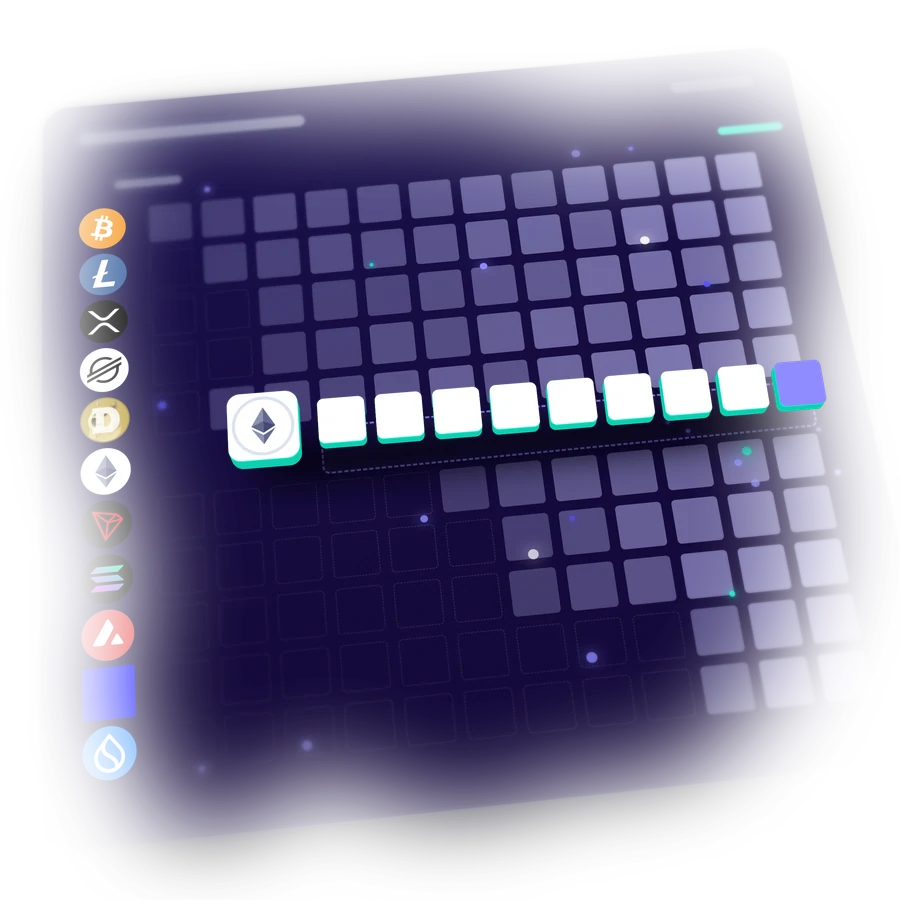
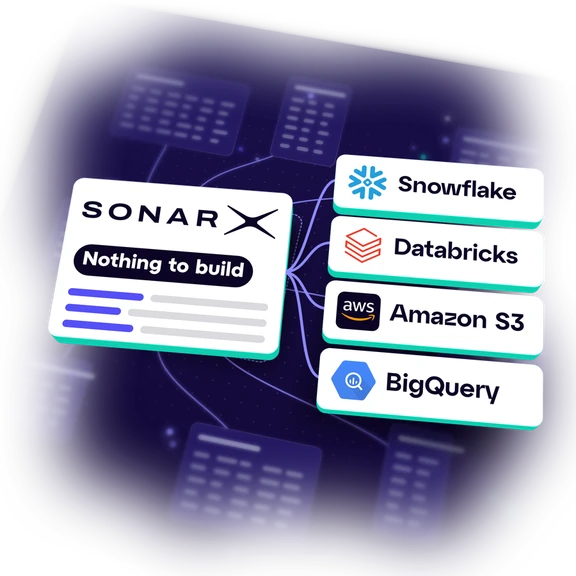
SonarX delivers 130+ blockchains (as of October 2026) in one normalized schema, from genesis to the current tip, straight into your own warehouse with no nodes or pipelines for you to run. These answers say what is covered, where coverage stops, and how to test the data before you rely on it.
The short answers
- Coverage
- 130+ chains as of October 2026, one normalized schema, genesis to the current tip.
- Balances
- Any block height on EVM chains, snapshots on Solana.
- Missing contract or chain
- Contract decoding requests are free, and a missing chain can be requested.
- Reorgs and traceability
- Reorgs are handled in the pipeline, and every row carries its chain, block and transaction, so a reviewer can rebuild a figure and check it on a public explorer.
- Start dates
- Curated tables can start later than genesis, so ask for the start date of each table in your scope.
Chains and history
How many blockchains does SonarX cover?
SonarX covers 130+ chains as of October 2026, including Ethereum and the major EVM networks, Solana, Bitcoin, Sui, Aptos, Cosmos and TON. Every chain lands in one normalized schema, so blocks, transactions, logs, traces and transfers read the same way on each. The chain list shows what is live today, and Request a Chain covers the rest.
How far back does the history go?
History starts at genesis on every indexed chain and runs to the current tip. Some curated datasets start later: the lending tables begin on 1 January 2026, and DEX trade history depth varies by chain. Before a backtest or a multi-year study, ask SonarX for the start date of each table in your scope, so the sample period is the one you planned.
Can we get a wallet's balance at a past date or block?
Yes. On EVM chains you can read a balance at any block height, and Solana balances come as snapshots. Daily balance tables and state diffs let you rebuild holdings for a record date or a period end. For other chain families, confirm balance-history depth for the chains in your scope during scoping. Balances are priced at transaction time where a market price exists.
Do non-EVM chains use the same schema as Ethereum?
The core tables share one layout across chain families, so a query for transfers or blocks needs little change between Ethereum, Solana or Bitcoin. Fields that exist on only one family, such as Solana instructions or Bitcoin inputs and outputs, sit in additional columns or tables. The schema documentation lists them per chain, and SonarX walks your team through them during the trial.
130+
Chains, one schema
Explore every chain →





































Protocols, decoding and markets
Which protocols and markets are decoded?
Decoded event logs are standard on covered chains. Curated datasets add DeFi, staking, Hyperliquid and NFT sales, and tokens and payments; wallets and real-world assets are prepared on request. DEX trades include Uniswap v2, v3 and v4, Balancer, Raydium, Orca, Meteora, Phoenix, Aerodrome and SushiSwap, and lending covers 14 protocols on Ethereum. Coverage is constantly growing, so check the venue list with SonarX for the most up-to-date coverage and features.
What happens if a contract or token we need is not decoded yet?
Send the contract address through the support channel and SonarX decodes it at no charge. Raw logs and traces for that contract already exist on every covered chain, so your team can start from them while decoding is added. Once decoded, its events sit in the same tables as every other protocol, and your existing queries pick them up.
What if we need a chain SonarX does not cover?
Request it on the Request a Chain page. SonarX adds new chains into the existing schema, so queries written for other chains carry over without a rewrite. Timing depends on the chain family and is agreed with you when you make the request.
Do you provide order-book data?
For Hyperliquid, yes: L2 and L4 order books, fills, positions, funding, and liquidations. Centralized-exchange order books are out of scope (off-chain); exchange activity shows up on-chain through labeled deposit and withdrawal flows. Prediction-market coverage is constantly growing, so check the venue list with SonarX for the most up-to-date coverage and features.
Do you provide entity labels?
Labels are available on request for any chain. Label types include exchanges, custodians, issuers, protocols, and bridges. Name the chains and the label types you need, and SonarX scopes them with you.
Worked example
Trace one figure to its source
Step 1
Pick one row in a table you plan to rely on, such as a transfer or a balance, and note its chain, block, and transaction.
Step 2
Open that transaction on a public explorer for the chain and compare the block, the parties, and the amount.
Step 3
For an ERC-20 balance on an EVM chain, net the transfers for one address and token up to that block and compare the result to the balance table.
Step 4
If something differs, check the usual causes above, then send SonarX the transaction. Our engineers will review it and come back to you with a full explanation almost immediately.
The same check runs inside the one-week trial. SOC 2 Type I and II and GDPR documentation sits in the Trust Center.
Accuracy and reliability
How does SonarX handle chain reorganizations?
Reorgs are handled in the pipeline. A reliability layer tracks blocks that a chain later replaces, and the data quality framework checks completeness afterward, so the history you query is built to follow the canonical chain. If your use case runs right at the tip, as alerts do, ask SonarX how recent blocks are marked before they settle.
How do you check that the data is complete and correct?
An enterprise data quality framework checks completeness, integrity, and reliability on every chain. Each row ties back to its block and transaction on the source chain, so your team can check any figure against a node or a block explorer. During a free trial, test the data that matter to you.
Can we trace a figure back to the chain?
Yes. Rows carry the chain, block and transaction they came from, so a reviewer can rebuild a balance or a total from the underlying transfers and check each one on a public explorer. That is what makes a figure usable in working papers, client reports and published research, and it lets a second reviewer reach the same number without asking SonarX.
Will a query return the same answer next year?
Absolutely yes. History is reorg-aware and quality-checked, so the result for a past block or date stays stable. Results can change when SonarX adds something new, such as a newly decoded contract or a token price that was missing. For audit or filing work, save the query and its output in your evidence file at sign-off.
How are tokens priced, and can we use the price as a reference rate?
Prices come from a third-party market source on a 30-minute grid, and transfers are priced at the time of the transaction. Stablecoins carry their market price, with no par assumed.
Check SonarX coverage against your own list
Send SonarX the chains, tokens and contracts you need. The team confirms what is covered, what is decoded and where history starts before your trial begins.
Delivered through Instant Datashares, Kafka Streaming, the Realtime API, Balances and Curated Datasets.