
Customers · Banks & brokerages
On-chain data for banks and brokerages with a public-chain leg
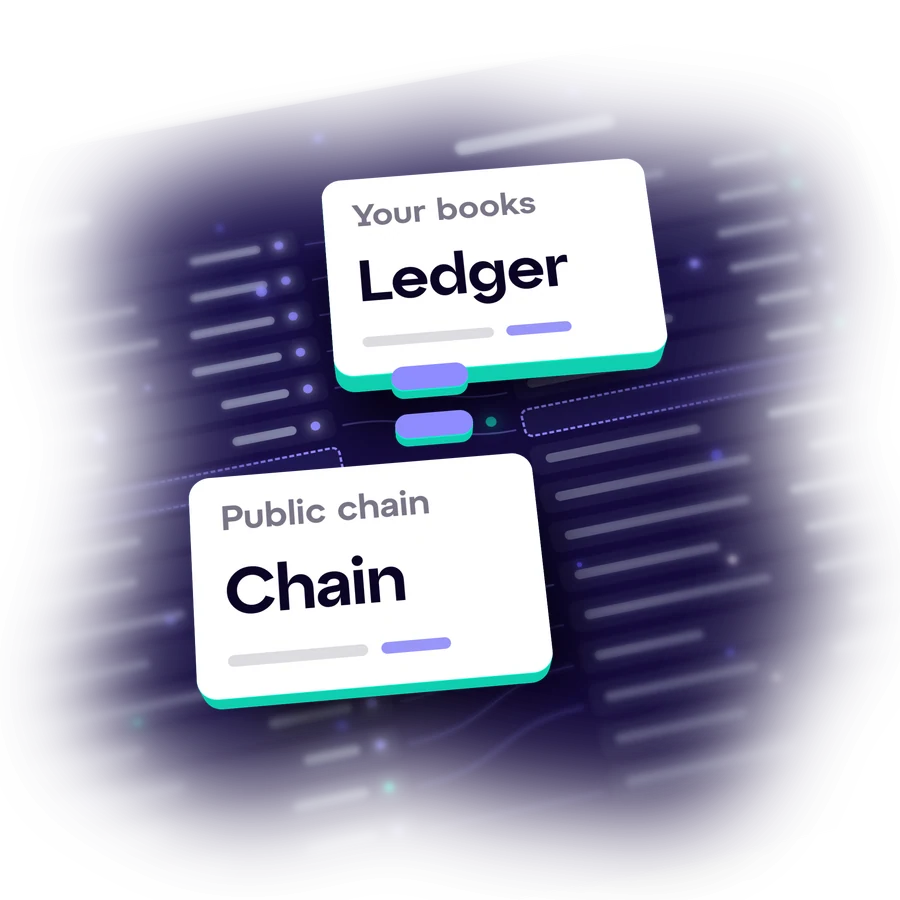
Once your token or your client's coin sits on a public chain, that chain becomes a ledger your controls have to answer for.
SonarX delivers complete, reorg-aware data for 130+ blockchains into the Snowflake or Databricks environment your bank already governs. No node to operate, no indexer to validate, no new system to receive the data.
At a glance
- Decision it supports
- Whether the on-chain side of your reserve report, custody evidence and investigations will stand up when an examiner reruns it.
- Available now
- Per-chain supply with mints, burns and holder balances, point-in-time balances with priced transfers and fair-value tables, wallet-level settlement transfers with stream alerts, transaction, trace and bridge history, and staking ledgers on 10+ proof-of-stake chains. With a Snowflake share, Snowflake's MCP support and Cortex work on the tables under your own roles. Record-date registers for tokenized notes and funds, the packaged settlement-check dataset, and labels, available on request for any chain. Contract decoding requests are free
- By request
- Decoding of contracts you name, and chains not yet covered.
When the chain becomes part of your books
A euro e-money token live on four networks. A deposit token on an Ethereum L2. A custody desk holding client bitcoin and staked ether. Each puts a bank liability or a client asset on a ledger you do not run.
Finance must tie supply on every chain to the monthly reserve report. Custody operations must show the examiner what each address held on the reporting date. Compliance must explain a flow that left through a bridge. Doing it in-house means a node per chain, a decoder per contract, a reorg policy, and an indexer that becomes a finding in the next IT audit.
Where SonarX is different for a bank
Your queries stay inside the bank
Data arrives by Snowflake Secure Data Sharing, Databricks Delta Sharing or files in your own bucket. Joins with the custody ledger and KYC tables happen in your environment. SonarX never sees the queries.
One schema for 130+ chains
Ethereum, Solana, Bitcoin and the next network your product team picks share one table layout: blocks, transactions, decoded events, traces and priced transfers. Contract decoding requests are free.
History an examiner can rerun
Every indexed chain runs from genesis to tip, handles reorgs, and is checked by the SonarX data quality framework for completeness and integrity. A query on a past reporting date returns the same rows next quarter.
Balances at the reporting date
EVM balances by block height, Solana by snapshot, daily balance tables and state diffs for any record date. The examiner's request becomes a query you can rerun.
Counterparties with names, on request
Entity labels are available on request for any chain. SonarX measured 332.9 million curated labelled addresses on 20 October 2026, including exchanges, custodians, issuers and bridges.
How banks and brokerages use SonarX
Produce one supply figure per chain for the monthly reserve report.
- Today
- Treasury adds up explorer totals per network and cannot explain why the sum differs from the mint ledger.
- With SonarX
- Circulating supply, every mint and burn event and holder balances per chain, daily and at month end, from the first block of issuance.
- You get
- A per-chain supply series your finance team and your auditor query from the same table.
Show what each client address held at period end, and reproduce it later.
- Today
- Operations exports from the custody platform and checks a sample of addresses against public explorers.
- With SonarX
- Point-in-time balances for every custody address, with the full transfer history behind each movement, priced at transaction time.
- You get
- Balances, transfers, priced roll-forwards and fair-value tables beside your custody ledger.
Tie every settlement leg to the payments ledger, including weekends.
- Today
- A break on a Saturday waits until Monday because nobody can see the chain side.
- With SonarX
- Transfers and balances for each settlement wallet on each chain, with alerts on failed and large transfers through real-time streams.
- You get
- A daily reconciliation file for finance and a live view for treasury..
Know who held a tokenized note on the record date.
- Today
- The register is rebuilt from transfer logs each coupon date, chain by chain.
- With SonarX
- Holder balances and record-date snapshots for each network the instrument is issued on.
- You get
- Address-level registers and lifecycle events.
Follow client funds across chains and bridges for an investigation.
- Today
- Analysts sample an explorer and lose the trail at the bridge.
- With SonarX
- Full transaction and trace history on every covered chain, bridge flows, and labels for the entities you name.
- You get
- The data your investigators and your KYT vendor work from.
Pay and report client staking rewards that match what validators earned.
- Today
- The validator dashboard and the custody ledger disagree.
- With SonarX
- Delegations, rewards earned against rewards claimed, commissions and slashing on 10+ proof-of-stake chains, refreshed daily.
- You get
- A staking ledger per client position.
One-week trial
Prove it in your one-week trial
Pick a set of custody addresses and a past reporting date, query their balances at that block or snapshot, and compare them to your custody ledger.
Choose your token on one chain, net its mint and burn events for last month, and compare the result to your mint ledger and to the contract's total supply on a public explorer.
Rerun the reporting-date balance query later in the trial week and compare it to your first run.
How it arrives
How the data reaches your bank
- Warehouse
- Snowflake Secure Data Sharing, Databricks Delta Sharing, or a managed Reader account that gives you a SQL workspace with no warehouse of your own.
- Files
- Parquet, CSV or Iceberg into your AWS S3, Google Cloud Storage or Azure bucket.
- Live
- A REST API for point-in-time balances and Kafka streams for live records.
Trials are scoped to the chains your products use.
Trust and controls
SonarX holds SOC 2 Type I and II and is GDPR compliant. Enterprise agreements cover all customer data. Reports and policies sit in the Trust Center.
Questions banks ask before they sign
Does our data, or do our queries, ever leave the bank?
No. SonarX shares data into your Snowflake or Databricks account, or writes files to your bucket. Your custody ledger, KYC tables and queries stay in your environment, and SonarX cannot see what you run. All customer data is confidential under the enterprise agreement.
Can your data be used for compliance purposes?
Yes, SonarX supplies provenance, flow of funds, balances, labels, and issuer freeze history, and several compliance vendors build their screening on that data. Keep your screening vendor and give it a complete multi-chain record.
Can SonarX produce the numbers for our reserve report?
SonarX produces the on-chain side: circulating supply, mint and burn events and holder balances per chain, daily and at month end.
Can we join SonarX data with our custody ledger and client records?
Yes. The data lands in your warehouse, so your team joins it to the custody ledger, client accounts, and counterparty lists without moving them out.
Which chains do you cover, and what if our token launches on a new one?
SonarX covers 130+ chains as of October 2026, from genesis to tip. If a network your product needs is missing, ask through Request a Chain. Contract decoding requests are free, so a new token contract does not wait on a budget cycle.
Do we need our own warehouse or engineers to start?
No. A managed Reader account gives analysts a SQL workspace with no warehouse of your own, and qualified teams get a one-week trial on a share, a Reader account or Kafka. Engineering teams that prefer files or the API can start there.
Test it on your own chains
Delivered through Instant Datashares, Kafka Streaming, the Realtime API, Balances and Curated Datasets.